
Seychelles Weather, climate and geography
Weather and climate
Best time to visit
Seychelles has a warm tropical climate throughout the year, with temperatures generally ranging from around 24°C (75°F) at night to 30°C (86°F) during the day. Humidity is high and rain can occur at any time, often in short, heavy showers. The weather is shaped principally by the northwest monsoon and southeast trade winds, separated by calmer transition periods.
Northwest monsoon (November to March):
This is the warmer, wetter and more humid period. December and January are generally the wettest months, although prolonged rain throughout the day is less common than heavy tropical showers interspersed with brighter periods. Daytime temperatures are typically around 30°C (86°F). Winds are generally lighter than during the southeast trade-wind season, but rainfall and thunderstorms are more frequent.
Transition period (April to May):
Winds become light and seas are often particularly calm, making April and May excellent months for swimming, snorkelling and diving. Underwater visibility can be very good, although conditions are hot and humid, particularly in April. Temperatures frequently reach around 30-31°C (86-88°F).
Southeast trade winds (June to September):
Stronger southeast winds bring slightly cooler, less humid and generally drier conditions. Daytime temperatures average around 28-29°C (82-84°F). This is a comfortable period for hiking and other outdoor activities, but stronger winds can make exposed beaches and sea crossings rough. Beaches on the southeast-facing coasts may also experience more seaweed at certain times, while more sheltered coasts can offer calmer swimming conditions.
Transition period (October):
The southeast trade winds weaken during October, bringing warmer temperatures and calmer seas before the wetter northwest monsoon becomes established. Conditions are often excellent for diving and snorkelling, with good underwater visibility and relatively calm water.
Regional variations:
Mahé's mountainous interior receives considerably more rainfall than its coastal areas, and brief showers can occur even during the drier months. Praslin and La Digue are generally somewhat drier. Conditions also vary between opposite sides of the islands according to the prevailing wind, so a beach that is exposed to rough seas or seaweed on one coast may coincide with much calmer conditions on another.
All in all, April-May and October are generally the best periods for calm seas, diving and snorkelling. June-September offers cooler, less humid weather and is particularly suitable for hiking and outdoor sightseeing, although some exposed beaches can be windy and rough. Visitors prioritising beach holidays during the monsoon periods should choose their location carefully according to the prevailing winds.
Required clothing
Lightweight, loose-fitting clothing in natural or breathable fabrics is suitable throughout the year. Bring a light waterproof jacket or compact umbrella for tropical showers, particularly during the wetter northwest monsoon from November to March. A light layer can be useful on breezy evenings and during boat journeys in the southeast trade-wind season.
Strong sunshine makes a hat, sunglasses and high-factor sunscreen essential. Comfortable walking shoes are recommended for hiking, as trails can be steep, rocky and slippery after rain. Reef or water shoes can be useful on rocky shores and around coral, while swimwear should be confined to beaches, pools and resorts. More modest clothing is appropriate when visiting churches and other places of worship.
Geography
Seychelles is an island nation in the western Indian Ocean, northeast of Madagascar and approximately 1,600km (1,000 miles) east of mainland Africa. The islands are scattered across a vast area of ocean and are broadly divided into the Inner Islands, which include Mahé, Praslin and La Digue, and the more remote Outer Islands.
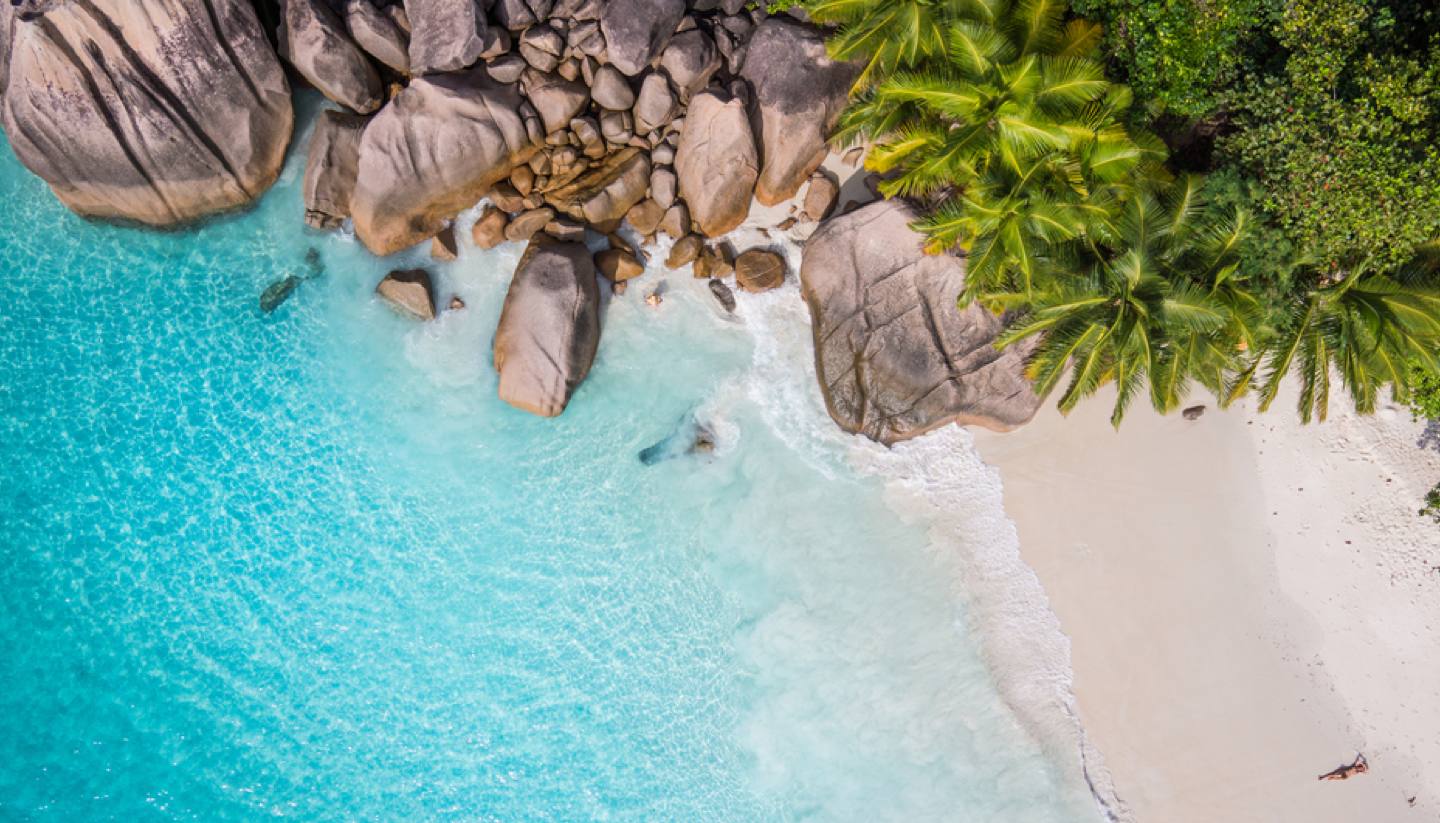
The Inner Islands are predominantly granitic, an unusual geological feature for oceanic islands. Mahé is the largest and most mountainous, with forested slopes rising steeply from a coastline of bays, beaches and granite headlands. Morne Seychellois, the country's highest point, reaches 905m (2,969ft). Praslin and La Digue share the characteristic granite landscapes but are smaller and lower.
The Outer Islands are mostly low-lying coral islands, sand cays and atolls spread across a much greater area of the Indian Ocean. They include the Aldabra group, whose enormous raised coral atoll is surrounded by reefs, lagoons and mangroves. Many of these islands are sparsely inhabited or uninhabited and support internationally important populations of seabirds, turtles and giant tortoises.
Tropical forests cover much of the higher terrain of the granitic islands, while mangroves and coastal wetlands occur around sheltered shores. Seychelles' geographical isolation has allowed numerous endemic plants and animals to evolve, giving the archipelago an exceptionally high level of biodiversity.